________________________________
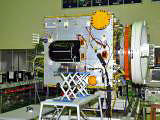 Indian Space Research Organisation today put the seventh and last satellite (IRNSS-1G) of Indian Regional Navigation Satellite System into orbit on Thursday.
With the positioning of the satellite shortly, India’s regional navigation system will come into operation. The system involves three satellites in the Geostationary Earth Orbit and four satellites in the geosynchronous orbit which will provide geographical positioning services (GPS).
________________________________
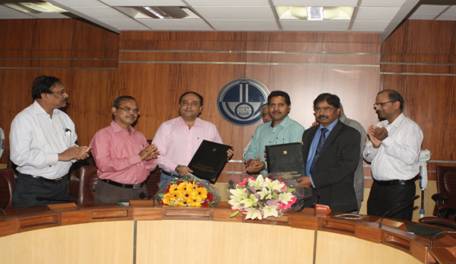 The National Research Development Corporation(NRDC) of the Department of Scientific & Industrial Research, Ministry of Science & Technology signed a License Agreement with Kudos Laboratories India for commercialization of Ayush-82, an ayurvedic formulation for prevention and management of Diabetes.
________________________________
 ISRO's Polar Satellite Launch Vehicle, PSLV-C32, successfully injected the 1425 kg IRNSS-1F navigation satellite into orbit on Thursday afternoon.
This is the thirty third consecutively successful mission of PSLV and the twelfth of its 'XL' configuration. The satellite is the sixth of the seven satellites to form the Indian Regional Navigation Satellite System (IRNSS).
________________________________
 A Mars Working has been formed by ISRO and NASA under the US-India Civil Space Joint Working Group with the objective of cooperation in exploration of Mars. Discussions are underway as to the possibility of co-operations in Mars Science and exploration.
________________________________
NASA’s hubble telescope has set a record by viewing farthest galaxy ever seen, an infant galaxy as it existed 13.4 billion years ago.
It is seeing into the pasts since the galaxy is so distant that it takes light 13.4 billion years to travel from the galaxy to earth. The international team astronomers operating the telescope saw it as it existed just 400 million years after the big bang, when the universe was only three per cent of its current age.
Pages