Gravitational Waves Detected 100 Years after Einstein's General Relativity
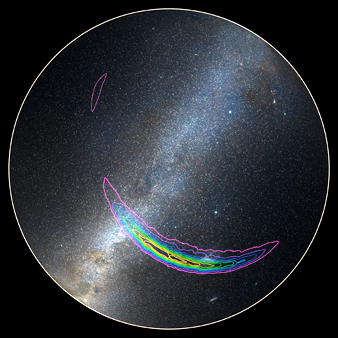 For the first time, scientists have observed ripples in the fabric of space-time called gravitational waves, arriving at the earth from a cataclysmic event in the distant universe. This confirms a major prediction of Albert Einstein's 1915 general theory of relativity and opens an unprecedented new window onto the cosmos.
Gravitational waves carry information about their dramatic origins and about the nature of gravity that cannot otherwise be obtained. Physicists have concluded that the detected gravitational waves were produced during the final fraction of a second of the merger of two black holes to produce a single, more massive spinning black hole. This collision of two black holes had been predicted but never observed.
The gravitational waves were detected on September 14, 2015 at 5:51 a.m. Eastern Daylight Time (9:51 a.m. UTC) by both of the twin Laser Interferometer Gravitational-wave Observatory (LIGO) detectors, located in Livingston, Louisiana, and Hanford, Washington, USA.
This year marks the 100th anniversary of the first publication of Albert Einstein's prediction of the existence of gravitational waves. With interest in this topic piqued by the centennial, the group will discuss their ongoing efforts to observe gravitational waves.
LIGO, a system of two identical detectors carefully constructed to detect incredibly tiny vibrations from passing gravitational waves, was conceived and built by MIT and Caltech researchers, funded by the National Science Foundation, with significant contributions from other U.S. and international partners. The twin detectors are located in Livingston, Louisiana, and Hanford, Washington. Research and analysis of data from the detectors is carried out by a global group of scientists, including the LSC, which includes the GEO600 Collaboration, and the VIRGO Collaboration.
Independent and widely separated observatories are necessary to determine the direction of the event causing the gravitational waves, and also to verify
that the signals come from space and are not from some other local phenomenon.
Toward this end, the LIGO Laboratory is working closely with scientists in India at the Inter-University Centre for Astronomy and Astrophysics, the Raja
Ramanna Centre for Advanced Technology, and the Institute for Plasma to establish a third Advanced LIGO detector on the Indian subcontinent.
Awaiting approval by the government of India, it could be operational early in the next decade. The additional detector will greatly improve the
ability of the global detector network to localize gravitational-wave sources.
Meanwhile, Prime Minister Narendra Modi has expressed joy over historic detection of gravitational waves and lauded the role of Indian scientists in the project.
"Historic detection of gravitational waves opens up new frontier for understanding of universe! Immensely proud that Indian scientists played an important role in this challenging quest. Hope to move forward to make even bigger contribution with an advanced gravitational wave detector in the country," the Prime Minister tweeted.
- Log in to post comments